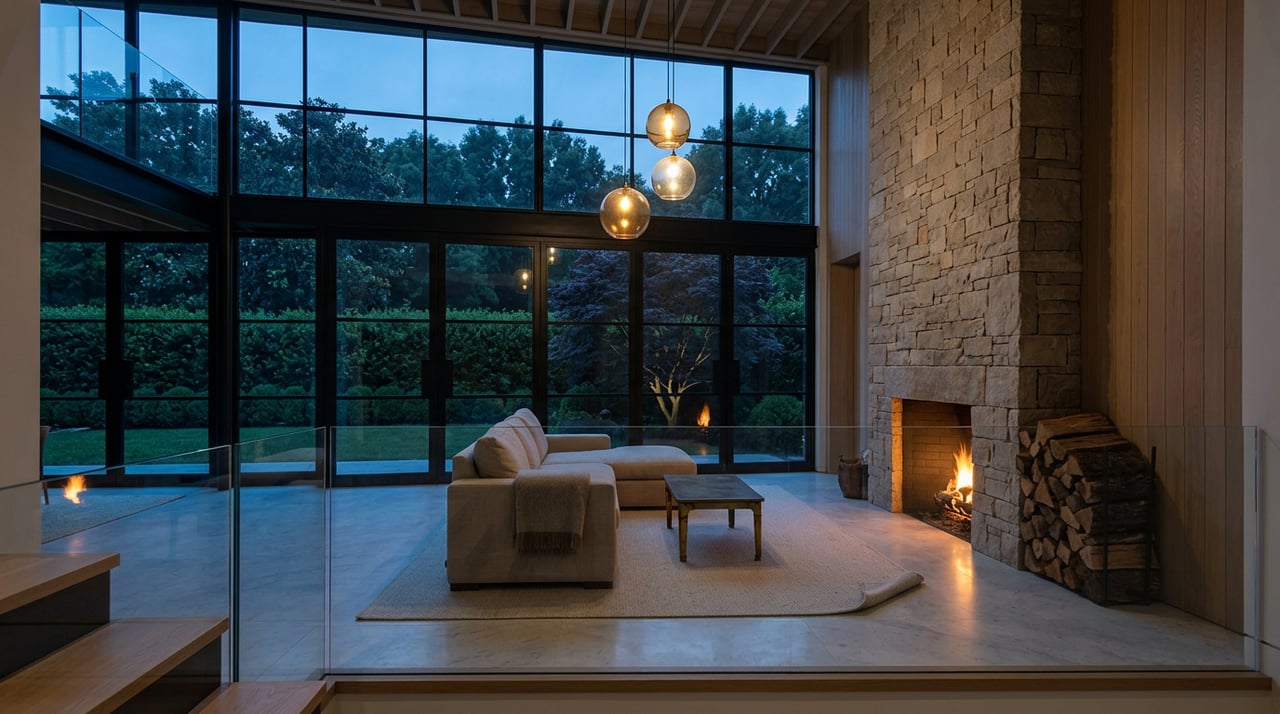
North Atlanta Isn't One Housing Market. It's Three Wearing the Same Name
September 3, 2026
September 3, 2026
Type "homes for sale in North Atlanta" into a search bar and the results won't agree with each other. One listing sits three blocks from a MARTA platform and goes under contract in three weeks. Another backs up to the Chattahoochee River and lingers through a whole season. A third, tucked inside the loop of I-285, carries a price tag that looks like it wandered in from a different zip code. All three get filed under "North Atlanta." None of them describe the same market.
That's not a portal quirk. It's the leftover of a city that stopped existing sixty years ago, and the name never got the memo.
From 1924 to 1965, North Atlanta was an incorporated city in its own right, covering what is now North Brookhaven and stretching south to Peachtree Road. Voters chose to disincorporate in 1965, and the name should have disappeared with the charter. It didn't. The U.S. Census Bureau kept counting a North Atlanta census-designated place all the way through the 2010 census, long after the city itself had folded into unincorporated DeKalb County. When Brookhaven finally incorporated on its own in 2012, with 55 percent of voters in favor and J. Max Davis elected as the city's first mayor, the old North Atlanta name didn't get retired either. It kept floating, and today it gets used as regional shorthand for the corridor that runs through Brookhaven, Sandy Springs, and the streets between them.
That history matters for anyone house hunting right now, because a label with no fixed boundary produces a median with no fixed meaning. When a search result blends Brookhaven and Sandy Springs into one "North Atlanta" number, it's averaging two cities that have never once agreed on price.
Over the three months ending in June 2026, the median sale price in Brookhaven was $799,000, up 6.5 percent from the same period a year earlier, with homes selling in around 24 days and fetching a median of $279 per square foot. A separate home value index put Brookhaven's typical home value at $753,512 as of July 31, 2026, up 2.9 percent year over year, with homes going to pending in about 20 days.
Sandy Springs tells a different story. Over the three months ending in April 2026, the median sale price there was $700,000, down 3.1 percent from a year earlier, with homes taking about 41 days to sell and a median of $243 per square foot, down 4.7 percent year over year.
Put plainly, Brookhaven is smaller, faster, and pricier per square foot. Sandy Springs is larger, slower, and buys more house for the dollar. A single "North Atlanta" median sitting somewhere between those two numbers describes neither city's actual market. It describes the average of two averages, a figure that matches no house currently for sale.
| Market | Median Sale Price | Days on Market | Price per Sq Ft | Window |
|---|---|---|---|---|
| Brookhaven | $799,000 | ~24 days | $279 | 3 mo. ending June 2026 |
| Sandy Springs | $700,000 | ~41 days | $243 | 3 mo. ending April 2026 |
| Sandy Springs, Inside 285 | $885,000 | ~54 days | $381 | 3 mo. ending April 2026 |
Sandy Springs itself isn't one market either. The stretch of the city that falls inside I-285, closer to Buckhead and the Northside medical corridor, posted a median sale price of $885,000 over the same three-month window ending in April 2026, well above the citywide figure. Price per square foot in that pocket ran to $381, a 27.2 percent jump year over year.
Read that number on its own and it looks like a market on fire. Read it next to the sales count and the picture gets more honest. Only 46 homes sold inside that pocket over the three-month window, up from 31 the year before. That's a small enough sample that a handful of high-end closings can swing the median hard in either direction, which is exactly what happened. The same pocket showed a 13.7 percent year-over-year decline in median price even as the price-per-square-foot figure climbed, and homes there took an average of 54 days to sell, unchanged from the prior year. Small sample sizes make dramatic headlines and unreliable forecasts in the same breath. A buyer comparing this micro-market to the Sandy Springs citywide median is comparing two different products: an inside-the-perimeter enclave with limited inventory against a much larger, more varied city that stretches west to the river.
None of this is abstract once you walk the ground. Brookhaven's identity centers on Dresden Drive and the Town Brookhaven retail core, a walkable village built around the Brookhaven/Oglethorpe MARTA station on the Gold Line, which carries roughly 1,250 surface parking spaces for commuters. North of the village, the character shifts toward established residential streets anchored by Blackburn Park and Murphey Candler Park and Lake, with the Nancy Creek PATH trail threading through and the historic Peachtree Golf Club, founded by Bobby Jones and designed by Robert Trent Jones, sitting nearby. Add in Historic Brookhaven, the neighborhood placed on the National Register of Historic Places in 1986 and built around the Capital City Country Club, and the premium per square foot starts to make sense. You're paying for proximity to a defined center and a shorter list of things you'd need a car for.
Sandy Springs spends its dollar differently. City Springs anchors downtown with a fourteen-acre mix of City Hall, a performing arts center, a conference center, and a public green, but the bigger draw for many buyers is the roughly 22 miles of Chattahoochee River shoreline running through the city, with Morgan Falls Dam creating a wider reservoir stretch popular for rowing, fishing, and paddleboarding. That's a fundamentally different lifestyle bet: more land, more river access, a slower resale pace, and a Sandy Springs MARTA station on the Red Line with a 1,050-space parking deck for the commute into town.
A dollar spent in Brookhaven buys proximity to a walkable center. A dollar spent in Sandy Springs buys acreage and river access. Neither is buying more house for less money. They're buying two different definitions of home.
If you're relocating into this corridor, or comparing it against a move-up in another part of Middle Georgia, the label on the search filter is the least useful piece of information you'll get. A few things worth doing instead:
Is North Atlanta still a real city today? No. It was incorporated from 1924 to 1965 and then disincorporated. The name has continued as an informal regional label covering Brookhaven, Sandy Springs, and nearby areas, even though neither city officially uses it.
What does "inside 285" mean on a Sandy Springs listing? It refers to the portion of Sandy Springs that falls within I-285, the highway loop that encircles Atlanta. That pocket has run at a meaningfully higher price per square foot than the rest of the city, though on a much smaller number of sales.
Which is more affordable, Brookhaven or Sandy Springs? Over the windows measured here, Sandy Springs carried the lower median sale price and lower price per square foot citywide. Brookhaven moved faster and commanded a higher price per square foot, reflecting its more compact, walkable footprint.
If you're weighing a move into this corridor and the "North Atlanta" search results aren't giving you a straight answer, that's the whole point of this piece. The label was never built to describe one market, and no amount of scrolling will make it start. Ceirra Johnson has spent years walking buyers through exactly this kind of Georgia geography, matching the life you actually want with the city that can deliver it. Reach out, and let's figure out which side of the old North Atlanta line is yours.
Stay up to date on the latest real estate trends.
Enjoy your visit, and please don't hesitate to contact me if there’s anything I can do to make your next home-buying or selling experience the best it can be.